

Modern football is faster than ever. For goalkeepers, reacting is no longer enough. Young goalkeepers often have the physical attributes. What determines progression is how fast they develop the mental side of the game — the ability to see patterns, anticipate outcomes, and position themselves before the shot is taken.This is cognitive performance in action.
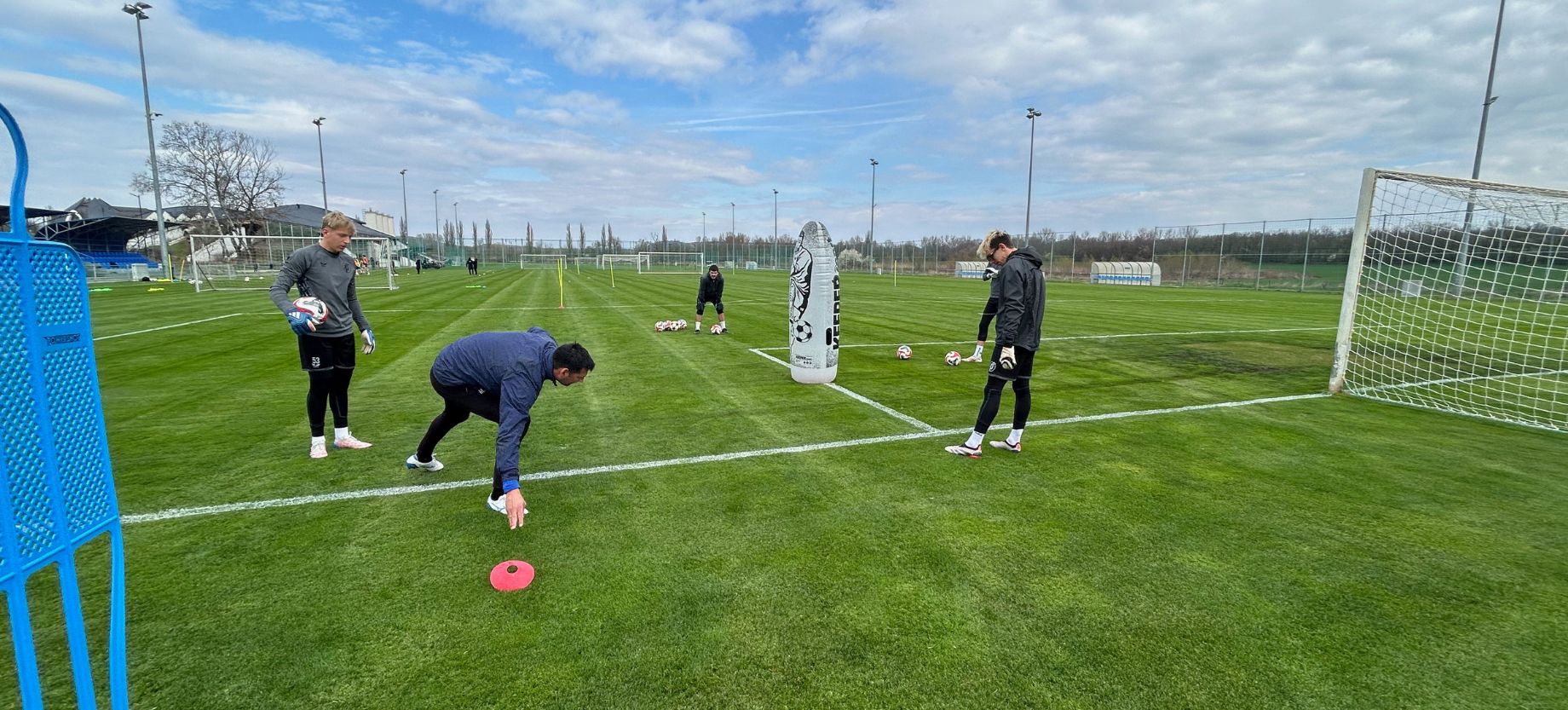
Over a focused three-month pilot, we embedded our eye-tracking system directly into live academy sessions. Not to collect data for the sake of it, but to understand how goalkeepers visually process the game in real time.This work took place inside real training environments — small-sided games, set-piece drills, high-speed crossing scenarios and one-on-one situations. We weren’t measuring isolated movements in controlled conditions.
We were observing how attention, scanning patterns and visual timing influenced decision-making under pressure. The breakthrough wasn’t where goalkeepers looked. It was when they recognised threats.
The most promising young keepers consistently shifted attention to high-risk areas earlier. They scanned more efficiently during build-up play. They adjusted positioning before the final action unfolded. These patterns reflected stronger cognitive organisation, not just better reflexes.

Crucially, this was not a technology experiment running parallel to coaching. It was integrated into it. Szabolcs, István Mitring and Péter Molnár interpreted the insights through decades of elite playing and coaching experience. Technology revealed behavioural patterns; coaches translated them into practical adjustments on the pitch.The objective is not to add another performance dashboard.
Academies already operate in data-rich environments. Our focus is different — understanding how goalkeepers perceive the game and designing training methods that sharpen anticipation, accelerate recognition, and improve decision speed.
The early results have generated interest across Europe, including discussions with Borussia Mönchengladbach about bringing this approach into their academy structure.This partnership represents a shift in emphasis. The future of goalkeeping is not only physical or technical. It is cognitive.The goal is simple: help goalkeepers see the game earlier — and act before others react.
The early results have generated interest across Europe, including discussions with Borussia Mönchengladbach about bringing this approach into their academy structure.This partnership represents a shift in emphasis. The future of goalkeeping is not only physical or technical. It is cognitive.The goal is simple: help goalkeepers see the game earlier — and act before others react.
The future of goalkeeping is not only physical or technical. It is cognitive.
The support, the experience, and the system’s simplicity are all part of it.

